
Ceramic & Porcelain Tile Installation
Precision installation for floors, walls, entryways, and custom patterns throughout Kerrville and the Texas Hill Country.
What Goes Into a Ceramic or Porcelain Tile Installation
Ceramic and porcelain are the two most commonly installed tile materials, and they behave quite differently from each other. Ceramic is made from clay and is slightly softer and more porous, which makes it a comfortable choice for wall applications and lower-traffic floors. Porcelain is fired at higher temperatures and pressed at greater density, making it more resistant to moisture absorption and wear. For Hill Country homes where the floors see heavy use, large-format porcelain has become the go-to material.
We install both. The approach changes depending on which you choose, where it is going, and what the substrate underneath looks like.
The Process We Follow
Substrate Assessment
Before anything else, we check the floor or wall for flatness, structural integrity, and moisture levels. Large-format tiles (anything over 15 inches on a side) require the substrate to be flat within 1/8 inch over 10 feet — a stricter tolerance than most people realize. If it is not flat, we use self-leveling compound or grind down high spots before proceeding.
Layout Planning
We dry-lay the tile pattern before setting a single piece with mortar. This lets us find the best center point for the room, plan how cuts will fall at the perimeter, and catch any pattern inconsistencies in the tile lot. A good layout prevents the small-sliver cuts at the doorway that make an otherwise clean installation look rushed.
Mortar Selection and Setting
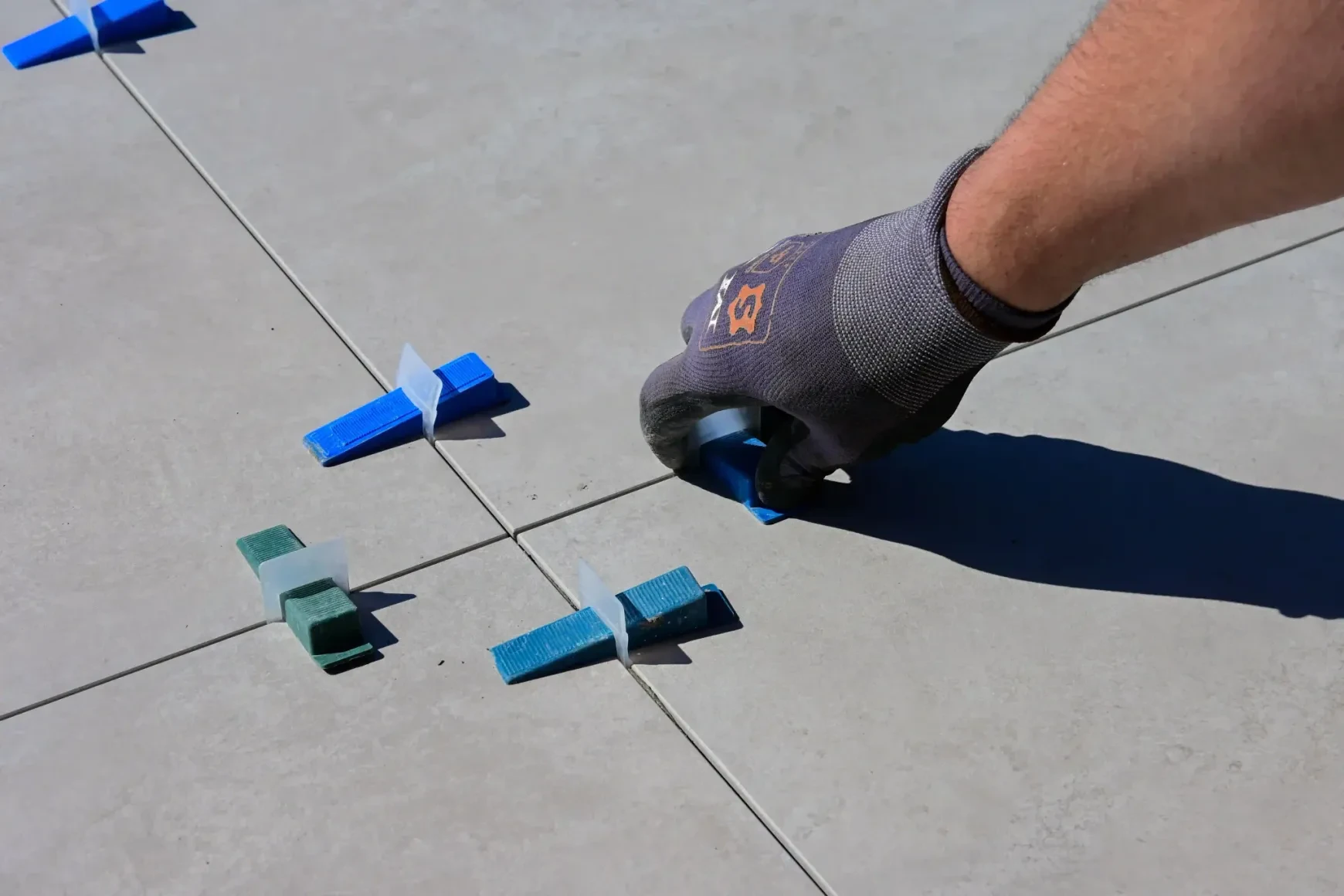
The mortar type is matched to the tile size and substrate. Large-format porcelain requires a medium-bed mortar or a large-tile thin-set with better coverage than standard formulas. We back-butter large tiles as well as troweling the substrate, which improves contact and reduces hollow spots. Leveling clips are used on large-format installations to keep adjacent tiles flush as the mortar cures.
Grouting and Sealing
After the mortar cures, we grout the joints using the size and color specified for the project. Unsanded grout is used for joints under 1/8 inch; sanded grout for wider joints. After the grout cures, we discuss sealing options. Cement-based grouts benefit from a penetrating sealer; some newer epoxy grout formulas do not require it.
Patterns We Install
Standard grid, offset (brick), herringbone, basket weave, diagonal, and custom patterns involving multiple tile sizes. Herringbone and diagonal layouts require more cuts and more time to plan, which affects the scope of the project. We walk through pattern options during the estimate.
Where We Install Ceramic and Porcelain Tile
Living room and bedroom floors, entryways, hallways, mudrooms, laundry rooms, covered patios, and commercial spaces. For wet areas like bathrooms and kitchens, see those service pages for the additional steps involved.
Available Across the Hill Country
This service is available in Kerrville, Ingram, Center Point, and Fredericksburg. Contact us to discuss your project wherever you are in the region.
Call us at (726) 900-1278 or send a message to start the conversation about your tile project.